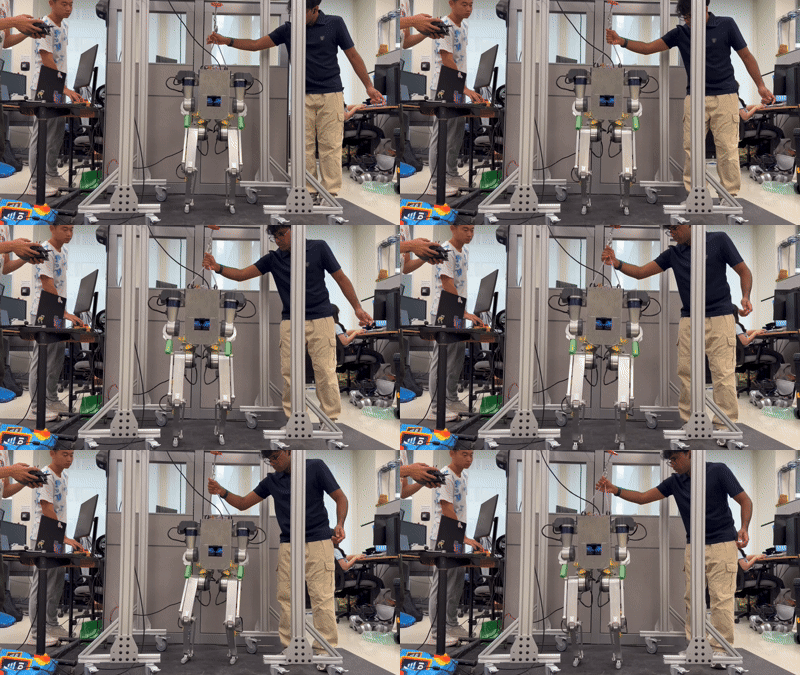
Dash
An 18-DoF open-source humanoid robot developed from scratch — custom motor controller design, firmware, communication architecture, and RL policy deployment.
Overview
Dash is an open-source humanoid robot platform developed independently from the ground up, spanning custom actuator electronics through learned locomotion control deployed on hardware. The system integrates a custom-designed motor controller and communication architecture, firmware, and a reinforcement-learning-based control stack into a single, fully open humanoid platform.
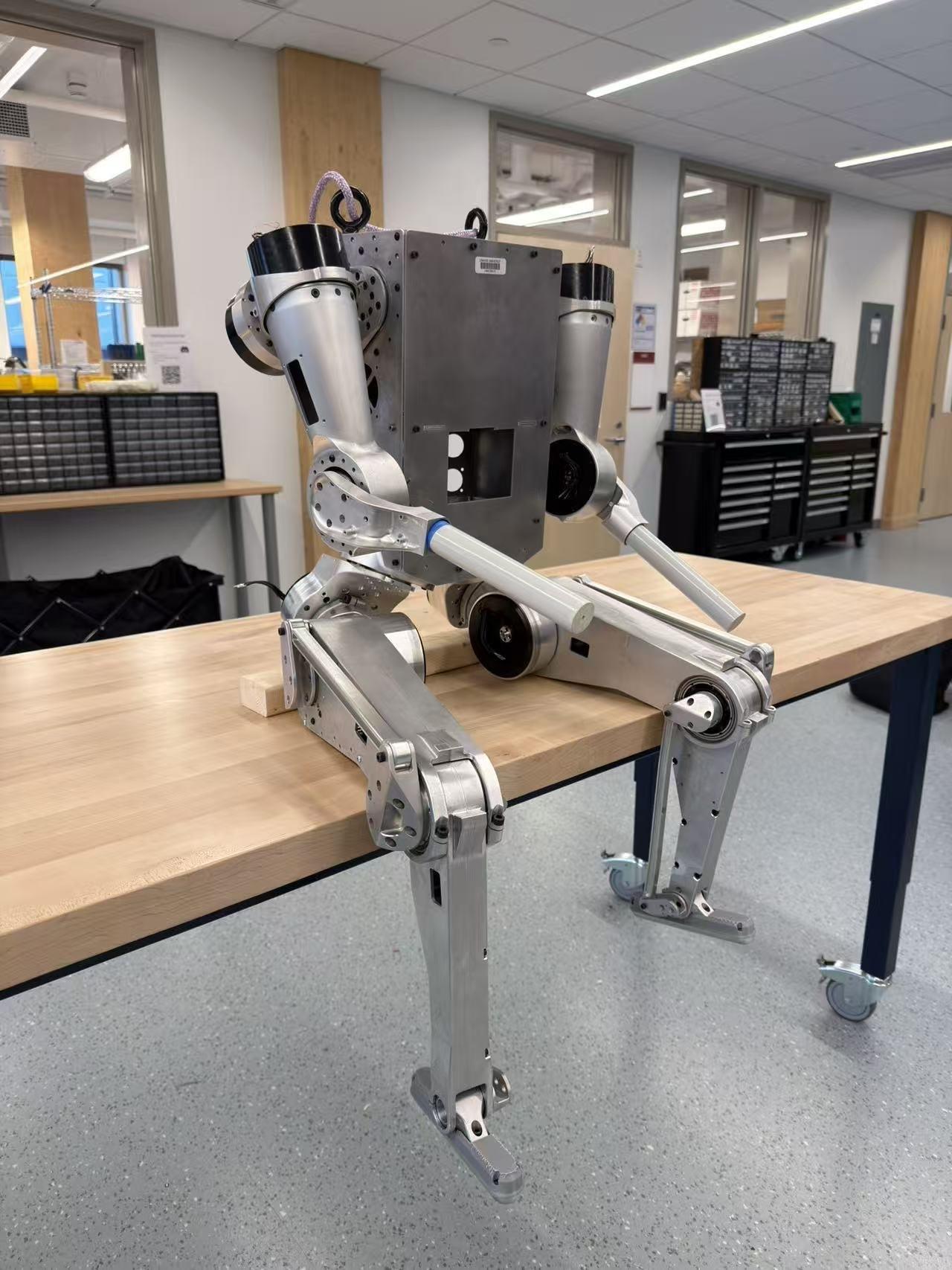
Specifications
| Height | 110 cm |
| Weight | 35 kg |
| Degrees of freedom | 18 total — 5 DoF per leg, 4 DoF per arm |
| Actuation | Cross-roller bearing motors at the shoulder pitch, hip, and knee joints for high dynamic motion and heavy payload handling |
| Electronics | Fully open-source design, including custom motor controller PCB and firmware |
Motor Controller & Communication Board
The motor controller and communication board form the electrical backbone of the robot, providing closed-loop actuator control and a communication bus linking every joint to the central compute.
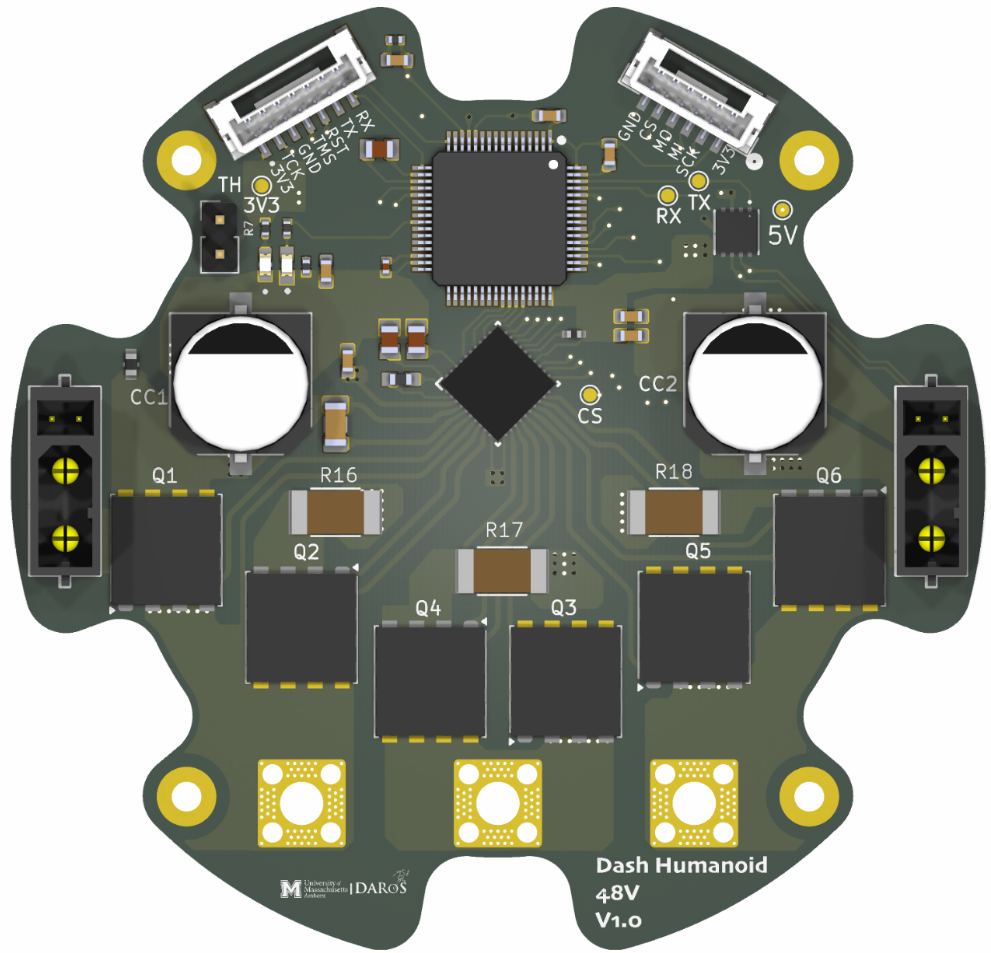
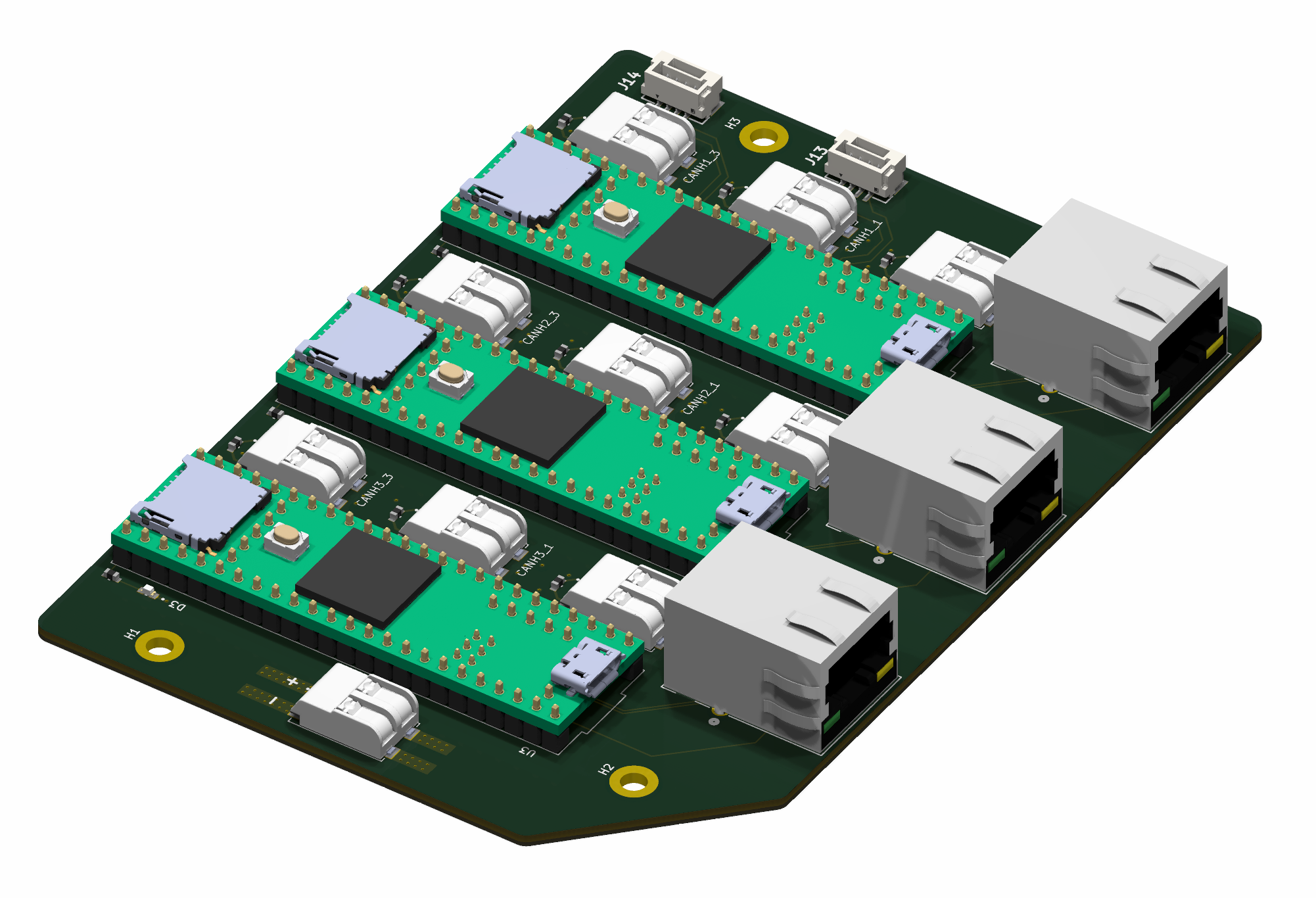
Motor Controller Specifications
Designed to an ODrive Pro-level specification:
| Voltage input | 12–54 V (tested) |
| Control loop frequency | 40 kHz |
| PWM switching frequency | 40 kHz |
| Communication | CAN 2.0 |
| Position sensing | 14-bit onboard encoder, with external encoder support via SPI |
| Thermal protection | NTC thermistor sensing |
Firmware
The firmware running on each motor controller handles low-level commutation, current sensing, and closed-loop torque and position control, and exposes the CAN interface used for coordination across the robot.
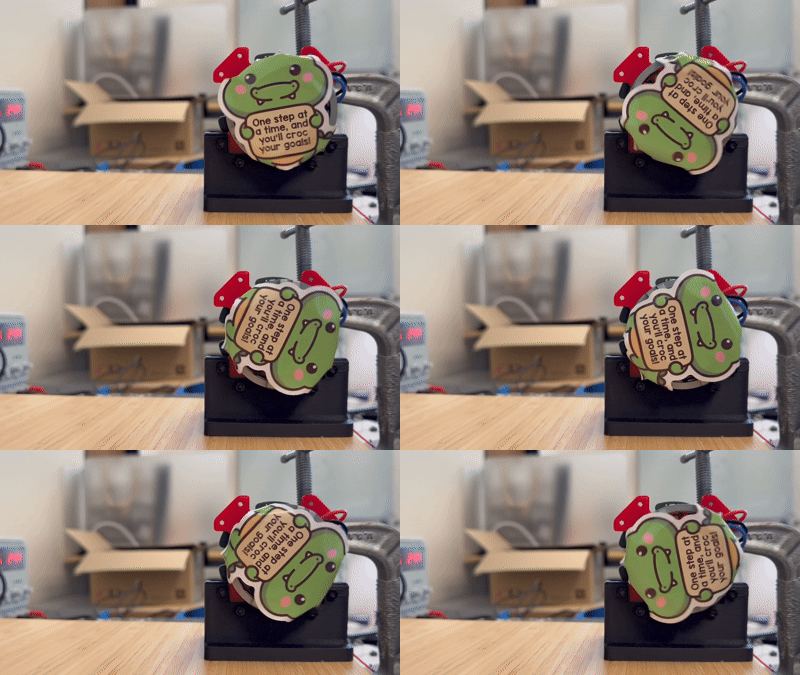
Motor Testing
Each motor and controller pair was bench-tested in isolation to validate control performance before integration onto the robot.
Robot Integration
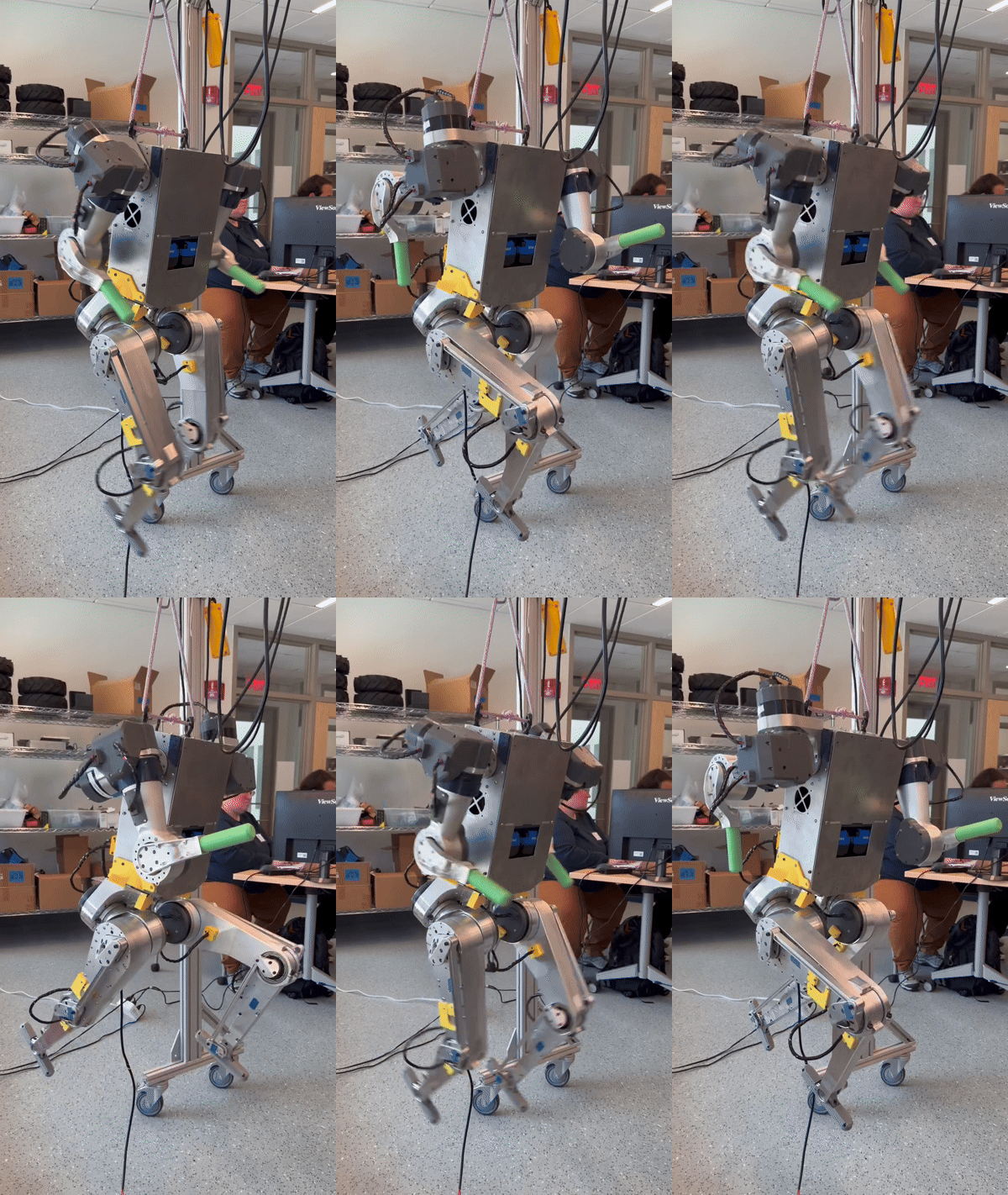
With all motors validated individually, they were integrated onto the robot frame and brought up as a complete system.
RL Policy Deployment
A reinforcement-learning locomotion policy was deployed onto the physical robot, closing the loop from custom electronics to learned control.